
I’ve been interested in bugs for my whole life, but only started photographing and properly teaching myself about them about three years ago.
Words by Moss Hepworth
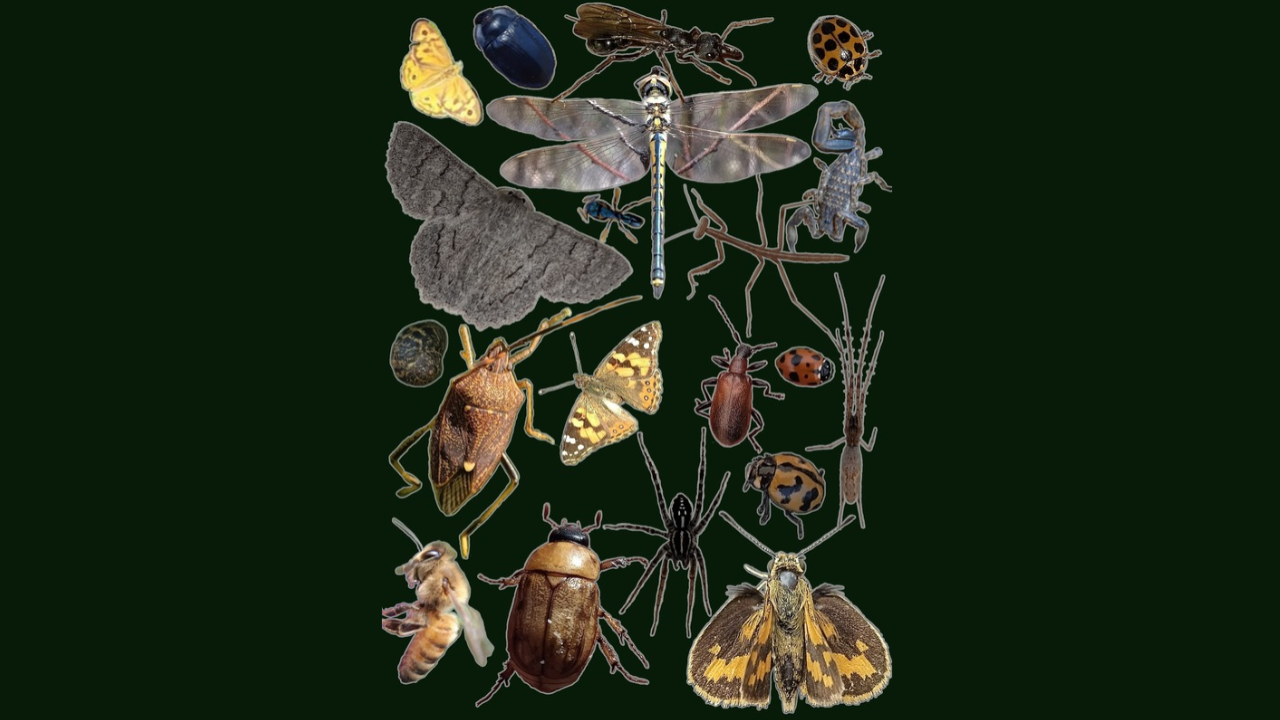
I think bugs are some of the most underappreciated parts of the world around us. Most people go about their day to day lives completely unaware of the amazing world full of life until it impacts them - like flies in their face or wasps trying to take a bite of their lunch. Arthropods are the most diverse and numerous group of life we have on this planet, and they have some of the most unique adaptations to their environment. Living in Australia is particularly interesting when it comes to bugs, since our arthropods are extremely unique and diverse but also sadly understudied. If you get into looking at them and photographing them, it's nearly certain that you will find an undescribed species or two! Because they're so understudied, I always upload my photography to the citizen science website Naturalist, which allows researchers across the world to use my findings and data alongside thousands of other normal people's findings to improve the knowledge in their field.
In this collage, I've highlighted just a selection of the hundreds of species you can find around campus. Next time you head over to class, keep an eye out and see if you can spot one of them, or maybe find something new.
Common Brown - Heteronympha merope
These are some of my favourite butterflies to spot during the warmer months. They’re a super common native species with beautiful orange inner wings and plainer brown outer wings to allow them to hide when they’re at rest. You can spot them anywhere, but open grassy areas are best since that’s where their caterpillars grow up, snacking on things like Kangaroo Grass. However, I wish you luck if you’re trying to get a photo since like all butterflies, they never sit still for long.
Blue Pie-Dish Beetle - Genus Pterohelaeus
These beetles are found under logs, stones, and leaf litter across the entirety of Australia. They use the unique shape of their bodies to protect themselves from spiders and ants attacking them. A super cool thing they do is when in danger they will bury themselves in the sand, leaving only their armoured back exposed. These were one of the first species of bug that really got me interested in this hobby, since they’re so distinctive and I found them all the time when helping my grandparents in their garden.
Inch Ant - Myrmecia pyriformis
You might know this species as a Bull Ant, but that’s actually the name of the whole genus, which includes over ninety different species of ant! I’m sure many of you know that these guys do have a pretty painful bite, but their reputation is a bit undeserved since they’re not aggressive and only bite to protect themselves or their houses. Personally, I think they should be more known for a cool rare ability of theirs: their colonies can live and reproduce without a queen ant at all!
Large Spotted Ladybird - Harmonia Conformis
These are a large native species of ladybird in Australia, and they can be identified by their size, as well as the number of spots – this species has a whopping 18 on its body! Like all ladybirds they are predators! They eat small insects like scale bugs or aphids that commonly prey on plants, so if you’ve got a green thumb and you see one of these fellows – say thank you, it’s a friend helping keep your garden nice and healthy.
Tau Emerald - Hemicordulia tau
This beautiful insect is one of Australia’s most common dragonflies, being found everywhere except the most northern parts of the country. They live near water typically as that is where their eggs and young develop, but can fly quite impressive distances if they need to! Like all dragonflies, they are apex predators due to their incredible flight abilities and their nearly 360 degree vision – watch one hunt sometime, its amazing to see just how quickly they can move. These abilities though can make it really difficult to get a good picture since they can see you coming and get away fast, my pic was snapped pretty early in the morning when most bugs are slower since they’re cold!
Little Marbled Scorpion - Lychas marmoreus
This scorpion is found across southern Australia, particularly cooler and wetter areas which is their preferred environment. I’ve found them down along the fire trails between Bedford Park campus and Flinders Living by flipping over rocks under shade or close to the creek bed. I’ve never had one try and attack me, they’re quite skittish but always be careful around scorpions anyway. They hunt and eat smaller invertebrates, with their favourite food being termites but really they’re not picky at all. They’ll quite happily try and eat anything that moves and is small enough to fit in their mouths.
Red-Lined Looper - Crypsiphona ocultaria
This is one of the most common moth species you see across Australia. I typically find them sitting on walls, kind of ruining their camouflage which hides them very well on trees. I’ve seen them all across campus, in the laundry room at Flinders Living and once even in my kitchen. Looking at the moth, its common name may not make sense, but the red lines are on the underside of the wings! If you ever see one on a window or glass door, try taking a look at the other side to see its beautiful markings.
Green-head Ant - Rhytidoponera metallica
These ants are beautifully coloured in distinctive metallic shades including green, purple, and even reddish, although I’m still on the hunt for a red one myself. They are active during the day, and can often be found walking along the leaves of trees and bushes harvesting sweet honeydew produced by sap-sucking insects for the sugar. Many ants do this, and it’s awesome to watch their symbiotic relationship – the ants provide protection and the sap-suckers provide honeydew.
Mallee Stick Insect - Archimantis sobrina
Not much information is available about this pretty praying mantis unfortunately – and believe me when I say I’ve looked! But it is a lovely endemic, found only in Australia, like the other eight species it is related to! It can also grow up to 18cm long, and adults can be green or brown, although I’ve only ever seen the brown ones in real life – maybe you’ll have better luck than me.
Garden Snail - Cornu aspersum
This fella is one you will know, they’re everywhere especially across the paths once it rains! Unfortunately these aren’t a native species, but an invasive species that comes from Europe. Like other snail species, they are commonly eaten in some parts of the world – but I wouldn’t go out trying this myself, I don’t fancy footpath escargot. If you ever want to move them off the path, make sure you tap on their shell a few times to get them to retract before picking them up since otherwise they can get injured from how strongly they’ve attached themselves to the ground.
Gum Tree Shield Bug - Poecilometis strigatus
This is a reasonably common bug that you should all keep an eye out for on their favourite food – gum trees! Don’t bother them too much though, because they are related to stink bugs and are capable of producing a smelly liquid if they feel threatened. This isn’t harmful to humans, but will have you washing your hands repeatedly. Even then it lasts a few hours, trust me on this one, I found out the hard way.
Australian Painted Lady - Vanessa kershawi
These beautiful butterflies are a migratory species, especially in New South Wales where they migrate in massive groups nearly 600km inland from the coast! I’ve never gotten the chance to see one of these mass migrations, but it’s certainly on my list of goals! Their caterpillars eat daisies, capeweed, scotch thistle and lavender, alongside many native plants – they’re super resilient!
Honeybrown beetle - Ecnolagria grandis
These small little beetles eat dead plants and fungus across south-east Australia! It’s not recorded as a specific anywhere that I can find, but I’ve personally found these beetles in massive groups on old fallen eucalyptus trees. My theory is that they’re meeting there to mate – but I’m not a biologist and I certainly don’t have the time or energy to write a paper about it.
Spotted Amber Ladybeetle - Hippodamia variegata
This is yet another introduced species that has come to us from Europe, but it hasn’t become quite as widespread as others, partly because it was introduced on purpose to control its prey which were already invasive! It prefers to live in fields and meadows, rather than denser forested environments as the sun helps it grow as well as locate mates.
Stretch Spider - Genus Tetragnatha
The name of this genus is immediately self explanatory when you look at these spiders, they love to sit in a long and stretched out position either in their webs or on a wall. When they do it right, it works as incredible camouflage and they really just look like a stick or bit of dead plant material. They especially love to build their webs around ponds because these spiders can walk on the water if it is still enough. Wander down to the campus pond and see if you can see any bits of grass that seem to be hovering horizontally above the water – if you do, take a closer look and you’ll probably find one of these friends.
Transverse Ladybird - Coccinella transversalis
These are one of the most common native ladybirds in Australia, you can distinguish them by the fact that they don’t have spots like most ladybirds. Instead of spots, they have thick wobbly lines across their backs. While they do have colour variation, I also generally find that they’re a lot more yellow and orange than the traditional ladybird red. I often see these guys on fences, but I’m not sure if actually prefer to be there or if they’re just easier to spot against the flat man-made metal.
European Honeybee - Apis mellifera
A very famous insect that I’m sure you all know and love for the delicious honey they make! They’re incredibly friendly and docile, I’ve never been stung by one and I’ve picked up more of them than I can count at this point. Compared to native bees they’re also a lot less scared of people and will often let me get really close with my camera. While picking them up understandably isn’t for everyone, I really can’t recommend enough just sitting by a flowering bush (I like the ones next to Anchor Court!) in summertime and watching them work away.
Argentinian Scarab - Cyclocephala signaticollis
This is a very common invasive scarab beetle that is unfortunately often mistaken for our beautiful Christmas Beetles. Like all scarab beetles, they’re attracted to light and I often see them hanging around any sort of outdoor light like porch lights or street lights. Also like all scarabs, they’re honestly not great at flying and if you watch them for just a minute or two you’ll get a chuckle out of their bumper-car method of navigating where they just randomly buzz around whacking into things and each other.
Spotted Ground Swift Spider - Nyssus coloripes
Every time I see one of these spiders, they live up to their name. They are spotted, I often see them on the ground, and boy are they swift! This speed comes in handy for them to hunt since they don’t make webs like most spiders, instead they hunt and ambush their prey. Their markings are super distinctive with orange front legs that can get really bright, and white spots all over – I often think the trio of white dots on their abdomen looks like a little frowny face. I see these guys a ton, often just on the ground or footpath outside around campus, but photograph them a lot less since their speed they use to hunt also works just as well for staying out of my camera shots. Even when I do get them in shot, half the time they’re blurry from the movement.
Green Grass-Dart - Ocybadistes walkeri
This moth is part of a group called ‘skippers’ which all hold their wings in the distinctive way in the photo, with the forewings being vertical and the hindwings horizontally – unlike most moths which fold their wings up together behind them or lay both pairs horizontally when at rest. The bald patch in my photo is because of the age of the moth! Most moths, but especially skippers in my experience, seem to develop these bald patches which just get worse the older they get – but they don’t seem to hinder the moth in anyway!